Showing posts with label watercolours. Show all posts

Wednesday, 23 May 2018

The One


We “met” almost 5 years ago and it felt like love at first sight (at least from my side). Since then I wanted to draw this building many times but somehow the right moment never came… under those 5 years (doesn’t sound convincing, I  know). I always had a soft spot for old wooden buildings with charming details and this one was very old and really beautifully detailed.

It’s called Vastveitsloftet and was originally build in  XIVth century in Norway. After a few hundred years it was transported to Stockholm’s Skansen.

The surrounding is really picturesque as the building is placed on a high rock, overlooking a bay. If we have poor eyesight we probably won’t even see gigantic, grey socialist architecture on the other side of the bay.

The building originally served as a storehouse and maybe that’s why it was so carefully decorated.
What I find charming in a wooden architecture, are imperfections in the material: knots, cracks, signs of deteriorations, and elements in different sizes.


One day later...

Sweet, but… dark, desaturated tones would be much more sufficient.


And one more day... 


Gloomy, but not too gloomy (i.e. lagom gloomy). For some strange reason, this mood fits old Scandinavian buildings quite well :)

Thursday, 20 August 2015

Female Portraits


How about making an exercise from painting female characters with watercolors? Yaaay!

To be honest watercolors aren't the easiest technique of making portraits. Drawing realistic people requires a very high level of accuracy, while watercolor technique is quite often perceived as series of "controlled accidents". When I googled "watercolor portraits", the vast major of searching results presented a very painterly style - sort of unfinished faces with colorful splashes around them. But the good news is that there were also a few extremely accurate artworks! 

This exercise was made in a way I usually paint buildings. The only difference was that this time I decided to follow strictly photo references (most of my buildings are painted totally from imagination). Special thanks to stock models: http://faestock.deviantart.com/ http://nastiaosipovastock.deviantart.com/  http://mirish.deviantart.com/ and http://chirinstock.deviantart.com/ !


The first step is a pencil sketch. The more accurate it is, the easier it will be to paint over it with watercolors. Tool: a mechanical pencil (0.5 mm, lead hardness H) - it should prevent from smearing. Luckily I chose yellowish paper, so the coffee stain is almost invisible :) 

To achieve a skin color I mixed yellow and red in different proportions along with adding different amount of water to it. For shadows I was also adding a little bit of violet. This brush appeared to be very useful. I used it for the whole work (except the background and some clothes):


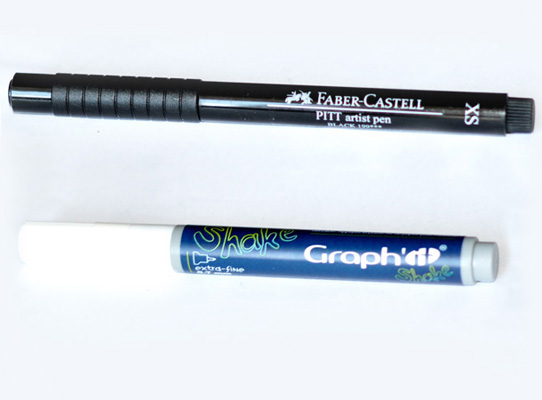
Just as in case of drawing buildings, I used a thin waterproof pen (size XS) for making contours. Metal details were highlighted with a white opaque marker. I was using it for the first time so I had no idea what kind of results should I expect. For me it's like a very thin corrector (0.7 mm):


During such exercises you probably won't have an opportunity to fully express your creativity or move into the world of imagination, but hopefully it will improve your attention to details, proportions and light. Strongly recommended from time to time!


Friday, 7 February 2014

Winter Scene


"stability isn't nearly so spectacular as instability. And being contented has none of the glamour of a good fight against misfortune (...) Happiness is never grand." 
Aldous Huxley, "Brave New World"


To be honest I do not like winter: a runny nose, frostnips, trudging through snowdrifts and wearing funny hats. For me the main advantage of the winter is  it's temporariness. Hovewer I have to admit that it's quite an inspiring drawing theme. It seems to be severe and ruthless (if we won't think about sleeding or making a snowman :) ).

Szczerze mówiąc, nie przepadam za zimą: katarem, odmrożeniami, przedzieraniem się przez zaspy śnieżne i noszeniem śmiesznych czapek. Główną zaletą zimy jest dla mnie jej tymczasowość, chociaż trzeba przyznać, że jest dość inspirującym tematem rysunkowym. Sprawia wrażenie srogiej i bezwzględnej (pod warunkiem, że nie myśli się o lepieniu bałwanów i jeździe na sankach :) ).


That's why I thought about an abandoned and devastaded hut among leafless trees, when I got a task to illustrate "Winter Scene".

Dla tego, kiedy miałam zilustrować "Zimową Scenę", przyszła mi do głowy opuszczona, zniszczona chata pośród bezlistnych drzew.

Snowflakes were made by spattering  masking fluid with a brush with hard bristles (before using watercolors of course). These yellowish drops looking like a resin (this is the best association I came up with) are in fact my new masking fluid (the previous one was grey).

Efekt płatków śnieżnych powstał poprzez rozpryskiwanie płynu maskującego za pomocą pędzla o twardym włosiu (oczywiście przed użyciem akwareli). Te żółte krople przypominające nieco żywicę (to najlepsze skojarzenie, jakie przyszło mi do głowy) to właśnie mój nowy zaschnięty płyn maskujący (poprzedni, jak być może ktoś zauważył we wcześniejszych wpisach, był szary). 

After removing the masking fluid we can see a paper white like (exactly!) snow.

Po zdjęciu go pozostaje papier - biały niczym (a jakże!) śnieg.

Finally I can add little more shadows and emphasize elements in the foreground with a pen.

Na koniec jeszcze trochę cieniowania i "wyostrzenie" elementów na pierwszym planie za pomocą piórka.

Oh yes, details:

Ach tak, detale:

Monday, 5 August 2013

How To - "An Unpublished Illustration"


“The place where you made your stand never mattered. Only that you were there...and still on your feet.”
Stephen King, "The Stand"


Today I'm goin to  show a method of painting called  "from entirety to particularity". This artwork illustrates a story about the Thirty Years War. It was meant to be published in a cultural magazine... if the magazine would have been published. Unfortunately few days before releasing it, the publication got suspended . It's quite a pity because the story was just excellent!

Dziś pokażę metodę malowania "od ogółu do szczegółu". Poniższa praca miała ilustrować opowiadanie dotyczące wojny trzydziestoletniej, które ukazałoby się w czasopiśmie kulturalnym... gdyby owo czasopismo się ukazało. Niestety kilka dni przed terminem wydania zawieszono publikację na czas nieokreślony. Jest czego żałować, bo opowiadanie było świetne!


1. A delicate application of colors and first layer of textures. A broad brush, plenty of water, a lot of paint, lots of salt and.. a little time.

1. Delikatna sygnalizacja docelowej kolorystyki i pierwsza warstwa tekstur. Szeroki pędzel, dużo wody, sporo farby, mnóstwo soli i... mało czasu.

2. When the first layer dries up it's time for another one. Now with a thinner brush we should block colors , simulate a distance and continue defining textures of different materials (plants, ground, water etc.). Usually at this stage the drawing looks the worst. We have to get over it and  go to the next stage with faith and hope.

2. Po jako takim wyschnięciu pierwszej warstwy, pora na następną. Teraz, przy użyciu mniejszego pędzla, należy "zblokować" kolory, zacząć symulować przestrzeń i dalej definiować faktury materiałów(roślinność, ziemia, woda itp.). Zazwyczaj w tej fazie  rysunek wygląda najgorzej. Trzeba to przeboleć i przejść do następnego etapu z wiarą i nadzieją.

3. No we should grab a very thin brush and start to paint details. By the way we can unify colors (in this case I warmed colors of shadows, sky and hills in the background)and emphasize an impression of a distance (especially by adding contrasts to the nearest area).

3. Chwytamy cieniutki pędzel i przechodzimy do szczegółów. Przy okazji można ujednolicić kolory (w tym wypadku ociepliłam kolor cieni, nieba oraz pagórków w tle) oraz podkreślić przestrzeń (szczególnie przez skontrastowanie najbliższego obszaru).

I'm affraid that there won't be any brilliant punchline... just a closer look on some details:

Chmmm, obawiam się, że nie będzie żadnej błyskotliwej puenty... tylko rzut oka na detale:

Thursday, 5 April 2012

Masking Fluid

"(...) that is the secret of happiness and virtue-liking what you've got to do."
"Brave New World"
Aldous Huxley

"(...) to jest cała tajemnica szczęścia i cnoty. Lubić to, co się musi robić."
"Nowy Wspaniały Świat"
Aldous Huxley


I haven't  mentioned about masking fluid on this blog I suppose. It's actually almost necessary tool for every watercolour artist (do not mistake with matting fluid almost necessary for every pimpled teenage girl). There he is:

Zdaje się, że nie wspominałam jeszcze na blogu o fluidzie maskującym. Tymczasem jest on niemal niezbędny dla każdego akwarelisty (nie mylić z fluidem matującym, niemal niezbędnym dla każdej pryszczatej nastolatki). Oto i on:


 1. For uninitiated - it looks awfully, smells even worse, it's consistency is truly repulsive and I really don't  want to know how does it taste. Still it preserves selected areas of painting from accidental pouring paint over them (especially when we use "wet on wet" technique). After placing masking fluid with a brush we'll have to wait until the fluid dries up.

 1. Dla niewtajemniczonych -wygląda okropnie, pachnie jeszcze gorzej, ma doprawdy paskudną konsystencję i nawet nie chcę wiedzieć jak smakuje. Niemniej zabezpiecza wybrane przez nas obszary rysunku przed przypadkowym zalaniem farbą (szczególnie gdy stosujemy technikę "mokre na mokrym", np. podczas malowania nieba). Po nałożeniu go pędzelkiem trzeba poczekać aż wyschnie.
2. Now we can paint with confidence.
2. Teraz można malować bez obaw.
3. When paint dries up, masking fluid can be simply removed (just like a sticking tape, but it doesn't tear up a paper).
3. Po wyschnięciu farby, po prostu go zdejmujemy (jak taśmę klejącą, z tą różnicą, że nie drzemy przy okazji kartki).
4. Generally this would be enough about masking fluid. It's time to go to the main topic.
4. W zasadzie to by było tyle w temacie fluidu maskującego. Pora przejść do głównego tematu.
5. The environment...
5.Teraz  otoczenie...
6. Finally, the emphasis of the most important elements with a pen (the sketch was made with a barely alive felt pen, so it disappeared under the watercolour paint).
6. Wreszcie pokreślenie najbardziej istotnych elementów piórkiem (szkic był wykonany ledwo żywym pisakiem, więc zniknął pod akwarelą).
Maybe it's not the most spectacular example of using masking fluid but this should be enough to show the general rule of using it :)
Być może nie jest to najbardziej spektakularny przykład użycia fluidu maskującego, ale powinien wystarczyć do pokazania ogólnej zasady użycia :)